

Cyprinidae

Bornean Sultan Fish
Leptobarbus melanotaenia
FISH SPECIES
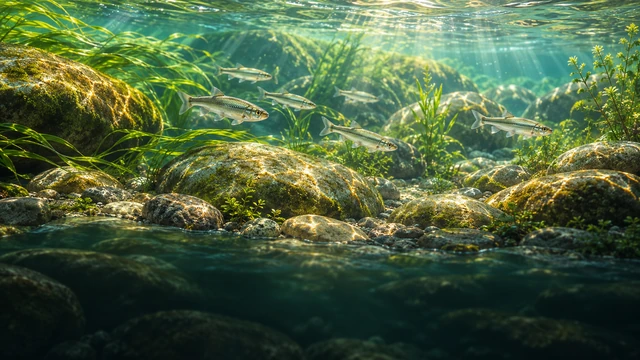
Freshwater fish spend all or part of their lives in rivers, lakes, streams and wetlands. The label describes an environment, not one branch of the fish family tree, so freshwater species include many unrelated shapes and lineages.
01 / NATURAL HISTORY
Freshwater habitats contain far less salt than seawater and can change quickly with seasons, floods and drought. Fish living there use many different strategies, from streamlined bodies for current to barbels that help find food near the bottom.
02 / LIFESTYLE
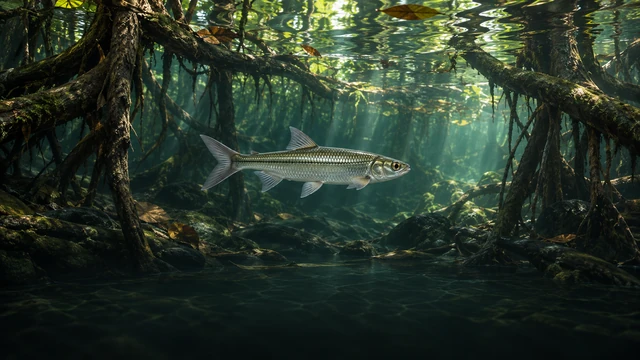
Life in freshwater follows the movement of water and food. Some fish hold position in a current and intercept drifting prey; others search plants or sediment for a meal. Changes in flow and water level can open feeding grounds or trigger movements toward spawning areas. These behaviors reflect how fish balance hydrodynamic energy expenditure against food intake.
OBSERVATION INDEX
03 / SPECIES
Discover representative species illustrating the ecological diversity, morphologies and adaptations of this group.
Cyprinidae
Leptobarbus melanotaenia
Gyrinocheilidae

Gyrinocheilus pustulosus
Osphronemidae

Betta taeniata
Cyprinidae

Osteochilus pentalineatus
Cobitidae

Pangio shelfordii
Melanotaeniidae

Melanotaenia boesemani
Poeciliidae

Tomeurus gracilis
Parodontidae

Parodon guyanensis
Percidae

Etheostoma wapiti
Alestidae

Bryconaethiops boulengeri
Cichlidae

Lepidiolamprologus boulengeri
Mastacembelidae

Mastacembelus alboguttatus
Rhamphichthyidae

Rhamphichthys drepanium
Amiidae

Amia calva
Amiidae

Amia ocellicauda
Cyprinidae

Enteromius viviparus
Cyprinodontidae

Cyprinodon simus
Galaxiidae

Brachygalaxias bullocki
Acestrorhamphidae

Oligosarcus robustus
Cyprinidae

Hybognathus hankinsoni
Bagridae

Tachysurus brashnikowi
Loricariidae

Dekeyseria pulchra
Acestrorhamphidae

Astyanax lacustris
Acestrorhamphidae

Stygichthys typhlops
04 / FIELD NOTES

It is recorded from inland waters with low salinity for all or part of its life cycle.
No. Freshwater is a habitat category that includes many separate evolutionary groups.
Most cannot; without physiological adaptations to excrete excess salt, their cells rapidly lose water through osmosis and dehydrate in hypertonic seawater.