

Cyprinidae

red-tailed black shark
Epalzeorhynchos bicolor
FISH SPECIES
Explore fish with elongated, anguilliform or ribbon-like silhouettes, and learn how length changes locomotion and foraging.
01 / NATURAL HISTORY
Elongated body plans reduce hydrodynamic drag, allow passage through tight apertures, and feature reduced or absent pelvic fins combined with extensive multi-vertebral muscular flexing systems.
02 / LIFESTYLE
True eels swim via full-body anguilliform waves, sending lateral bends down their entire length to push against water, allowing them to reverse direction inside narrow subterranean burrows. Needlefish and pikes maintain a rigid elongated torso, keeping the body straight until their posterior fins and muscular caudal peduncle unleash sudden, explosive forward lunges.
OBSERVATION INDEX
03 / SPECIES
Discover representative species illustrating the ecological diversity, morphologies and adaptations of this group.
Cyprinidae
Epalzeorhynchos bicolor
Nemacheilidae

Aborichthys elongatus
Cyprinidae

Distoechodon macrophthalmus
Pinguipedidae

Parapercis bimacula
Tripterygiidae

Enneapterygius niue
Pinguipedidae

Parapercis multiplicata
Gobiidae

Eviota nigriventris
Tripterygiidae

Enneapterygius rufopileus
Gobiidae

Tigrigobius rubrigenis
Amblycipitidae

Liobagrus reinii
Gobiidae

Bryaninops natans
Muraenidae

Monopenchelys acuta
Exocoetidae

Hirundichthys rufipinnis
Belonidae

Strongylura notata
Tetrarogidae

Paracentropogon rubripinnis
Ophichthidae

Scolecenchelys laticaudata
Gobiidae

Eviota rubriceps
Gobiidae
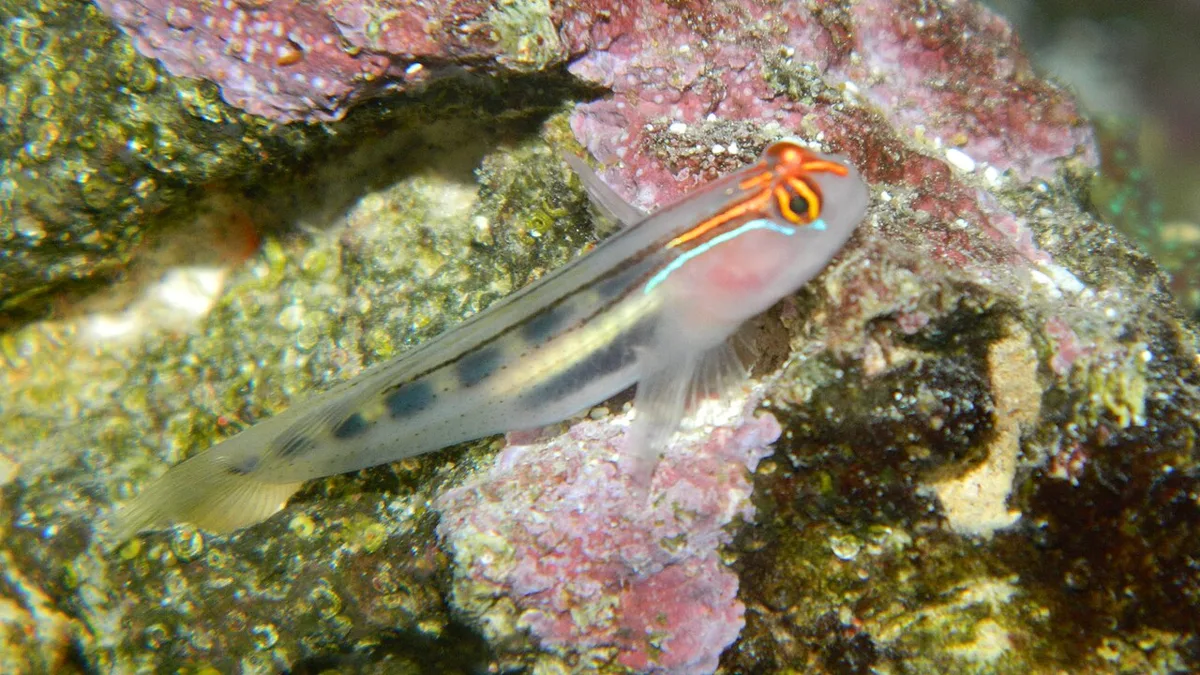
Elacatinus puncticulatus
Tripterygiidae

Acanthanectes rufus
Gobiidae

Coryphopterus urospilus
Percidae

Etheostoma maydeni
Synodontidae

Synodus rubromarmoratus
Gobiidae

Amblyeleotris rubrimarginata
Cyprinidae

Labeo altivelis
04 / FIELD NOTES

Pelvic fins create hydrodynamic drag and easily catch on obstructions when navigating tight crevices, burrows and rock cracks. Over evolutionary time, appendages were reduced or lost in favor of continuous median fins.
Rather than undulate their whole bodies, they hold their long torsos completely straight to resemble floating sticks or debris, then unleash rapid lateral head snaps or tail bursts to impale unsuspecting prey on their toothed jaws.