

Cyprinidae

Goldfinned barb
Puntius sachsii
FISH SPECIES
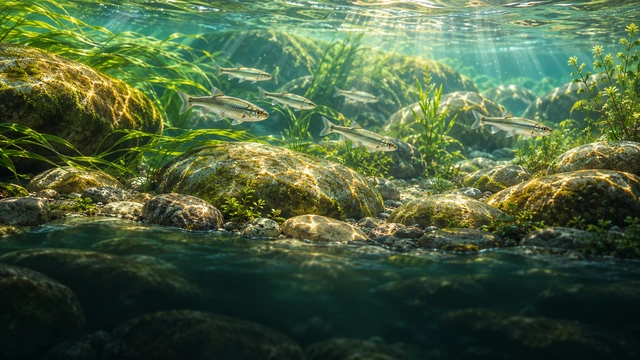
Freshwater fish spend all or part of their lives in rivers, lakes, streams and wetlands. The label describes an environment, not one branch of the fish family tree, so freshwater species include many unrelated shapes and lineages.
01 / NATURAL HISTORY
Freshwater habitats contain far less salt than seawater and can change quickly with seasons, floods and drought. Fish living there use many different strategies, from streamlined bodies for current to barbels that help find food near the bottom.
02 / LIFESTYLE
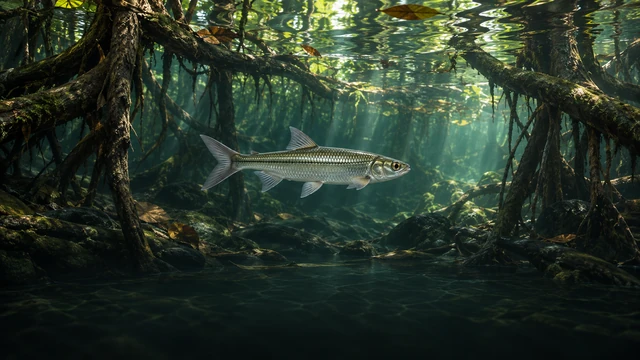
Life in freshwater follows the movement of water and food. Some fish hold position in a current and intercept drifting prey; others search plants or sediment for a meal. Changes in flow and water level can open feeding grounds or trigger movements toward spawning areas. These behaviors reflect how fish balance hydrodynamic energy expenditure against food intake.
OBSERVATION INDEX
03 / SPECIES
Discover representative species illustrating the ecological diversity, morphologies and adaptations of this group.
Cyprinidae
Puntius sachsii
Callichthyidae

Corydoras aurofrenatus
Cyprinidae

Enteromius pallidus
Melanotaeniidae

Melanotaenia goldiei
Percidae

Percina aurolineata
Channidae

Channa aurantimaculata
Acestrorhamphidae

Hyphessobrycon griemi
Stevardiidae

Creagrutus beni
Percidae

Etheostoma parvipinne
Cyprinidae

Crossocheilus cobitis
Galaxiidae

Galaxias gollumoides
Aenigmachannidae

Aenigmachanna gollum
Potamotrygonidae

Heliotrygon gomesi
Cobitidae

Canthophrys gongota
Sisoridae

Bagarius yarrelli
Cyprinidae

Securicula gora
Cyprinidae

Schizocypris altidorsalis
Cyprinidae

Clypeobarbus bellcrossi
Nothobranchiidae

Nothobranchius kadleci
Anostomidae

Leporinus gossei
Cyprinidae

Tropidophoxinellus hellenicus
Chilodidae

Chilodus gracilis
Heptapteridae

Pimelodella gracilis
Nothobranchiidae

Epiplatys grahami
04 / FIELD NOTES

It is recorded from inland waters with low salinity for all or part of its life cycle.
No. Freshwater is a habitat category that includes many separate evolutionary groups.
Most cannot; without physiological adaptations to excrete excess salt, their cells rapidly lose water through osmosis and dehydrate in hypertonic seawater.