

Cichlidae

Maylandia flavicauda
Maylandia flavicauda

FISH SPECIES
Cichlids belong to the family Cichlidae and are especially diverse in Africa and the Americas. The family includes small, colorful specialists as well as larger food and game fish.
01 / NATURAL HISTORY
A single nostril on each side of the head and specialized throat jaws help characterize the family. Cichlids are also known for varied feeding strategies and unusually diverse parental care.

02 / LIFESTYLE
Cichlid life histories are renowned for intricate social hierarchies, territorial zoning and exceptional parental investments. Breeding adults carefully clean substrates for spawning, vigorously ward off egg predators, and in mouthbrooding lineages, protect developing embryos inside the buccal cavity for weeks. Complex body posturing, fin flares and color transformations establish dominance without lethal physical conflict.
OBSERVATION INDEX
03 / SPECIES
Discover representative species illustrating the ecological diversity, morphologies and adaptations of this group.
Cichlidae
Maylandia flavicauda
Cichlidae

Maylandia flavifemina
Cichlidae

Maylandia mbenjii
Cichlidae

Maylandia pulpican
Cichlidae

Mchenga thinos
Cichlidae

Melanochromis dialeptos
Cichlidae

Melanochromis heterochromis
Cichlidae

Melanochromis kaskazini
Cichlidae

Melanochromis lepidiadaptes
Cichlidae

Melanochromis melanopterus
Cichlidae

Melanochromis mpoto
Cichlidae

Melanochromis simulans
Cichlidae

Mesoheros gephyrus
Cichlidae

Mesonauta egregius
Cichlidae

Mesonauta karipuna
Cichlidae
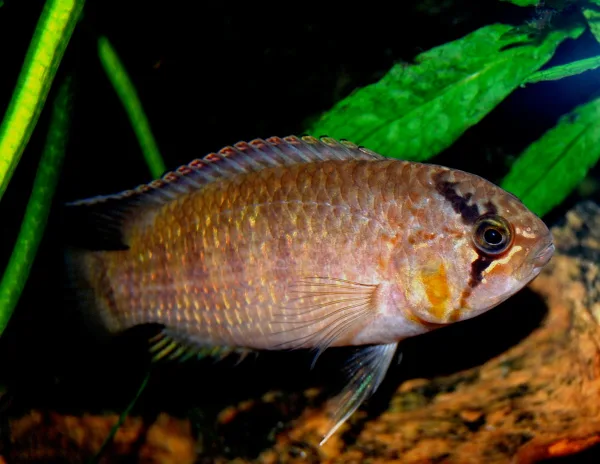
Nannacara adoketa
Cichlidae

Nannacara bimaculata
Cichlidae

Nanochromis consortus
Cichlidae

Nanochromis minor
Cichlidae

Nanochromis parilus
Cichlidae

Nanochromis splendens
Cichlidae

Nanochromis teugelsi
Cichlidae

Nanochromis transvestitus
Cichlidae

Neolamprologus bifasciatus
04 / FIELD NOTES

In mouthbrooding species, a parent gathers fertilized eggs into their buccal cavity, gently churning and oxygenating them for weeks until fry develop and can swim independently.
Africa's Great Rift Valley lakes (Victoria, Tanganyika, and Malawi) and the freshwater basins of Central and South America support thousands of ecologically diverse cichlid species.
Most cichlids possess strong territorial instincts rooted in defending substrate spawning sites and food boundaries, reacting vigorously to perceived visual rivals.