

Heptapteridae

Jacky
Pimelodella cristata

FISH SPECIES
Catfish are members of the order Siluriformes, a diverse lineage found mainly in freshwater but also represented in marine environments. Their common name covers thousands of species rather than one familiar body shape.
01 / NATURAL HISTORY
Barbels around the mouth are a well-known feature, although their number and form vary. Many catfish also have prominent fin spines, sensory adaptations and skin that is naked or covered with bony plates instead of typical scales.

02 / LIFESTYLE
Catfish rely heavily on non-visual sensory systems to map murky or benthic environments. Highly sensitive chemosensory barbels and electroreceptors across the head detect chemical plumes and prey vibrations in sediment. While many species rest secluded beneath undercut banks or wood tangles by day, their foraging spans specialized predation, wood-scraping detritivory and active nocturnal hunting.
OBSERVATION INDEX
03 / SPECIES
Discover representative species illustrating the ecological diversity, morphologies and adaptations of this group.
Heptapteridae
Pimelodella cristata
Loricariidae

Hypostomus aspilogaster
Auchenipteridae
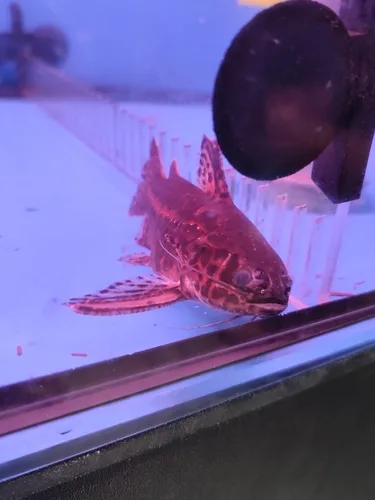
Liosomadoras oncinus
Loricariidae

Hypostomus gymnorhynchus
Ailiidae

Ailiichthys punctata
Plotosidae

Plotosus japonicus
Pimelodidae

Zungaro jahu
Bagridae

Mystus malabaricus
Astroblepidae

Astroblepus heterodon
Astroblepidae

Astroblepus pholeter
Loricariidae

Ancistrus cirrhosus
Mochokidae

Chiloglanis kalambo
Bagridae

Bagrus meridionalis
Callichthyidae

Corydoras kanei
Clariidae

Encheloclarias kelioides
Bagridae

Mystus armatus
Sisoridae

Pachypterus khavalchor
Bagridae

Chrysichthys brachynema
Ailiidae

Clupisoma montanum
Bagridae

Chrysichthys cranchii
Bagridae

Chrysichthys delhezi
Bagridae

Chrysichthys duttoni
Bagridae

Chrysichthys habereri
Bagridae

Chrysichthys laticeps
04 / FIELD NOTES

Known as barbels, these flexible appendages are covered with thousands of sensory taste buds and tactile nerve endings, enabling catfish to detect chemical trails and buried prey in murky waters.
No. While many forage along the substrate, catfish diversity includes active surface predators, wood-grazing armored species, pelagic schoolers and specialized fruit eaters.
The leading rays of their dorsal and pectoral fins form rigid spines that often possess serrated edges and glandular venom coatings that trigger severe inflammatory reactions.