

Pempheridae

Ibo sweeper
Pempheris ibo
FISH SPECIES
Discover fish with recorded distributions in Africa, across inland lakes, ancient river systems and coastal waters.
01 / NATURAL HISTORY
African ichthyofauna is famous for the rapid adaptive radiation of Rift Lake cichlids alongside archaic, relic lineages like lungfish and bichirs. These species demonstrate remarkable evolutionary resilience across dramatic tropical dry and wet cycles.
02 / LIFESTYLE
In the Great Rift Valley lakes (Victoria, Tanganyika, and Malawi), hundreds of cichlid species partition microscopic spatial zones—from rock-scraping mbuna to shell-dwelling dwarfs and scale-eating specialists. In contrast, riverine species navigating the Congo and Nile systems endure massive seasonal water level drops, with some surviving dry periods through aestivation or facultative air-breathing.
OBSERVATION INDEX
03 / SPECIES
Discover representative species illustrating the ecological diversity, morphologies and adaptations of this group.
Pempheridae
Pempheris ibo
Centrolophidae

Schedophilus ovalis
Bothidae

Arnoglossus imperialis
Blenniidae

Istiblennius bellus
Cyprinidae

Labeobarbus nelspruitensis
Mochokidae

Chiloglanis bifurcus
Cyprinidae

Enteromius innocens
Ariommatidae

Ariomma indica
Cepolidae

Acanthocepola indica
Chaetodontidae

Chaetodon mitratus
Apogonidae

Apogon indicus
Pomacentridae

Pomacentrus indicus
Gobiidae

Eviota indica
Platycephalidae

Platycephalus indicus
Antennariidae

Antennarius indicus
Mullidae

Parupeneus indicus
Psettodidae

Psettodes erumei
Ogcocephalidae

Halieutaea indica
Synodontidae
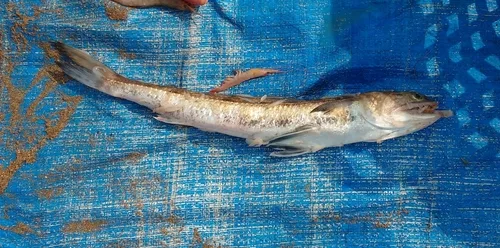
Synodus indicus
Scombridae

Rastrelliger kanagurta
Mullidae

Mulloidichthys ayliffe
Dasyatidae

Neotrygon indica
Pristigasteridae

Pellona ditchela
Acanthuridae

Zebrasoma desjardinii
04 / FIELD NOTES

The Great Lakes of East Africa witnessed explosive evolutionary radiations where a few ancestral species diverged into hundreds of ecologically specialized species in remarkably short geologic time spans.
Certain species, like the African lungfish, can burrow into muddy riverbeds and secrete a protective mucous cocoon to aestivate for months until rains restore the waterway.