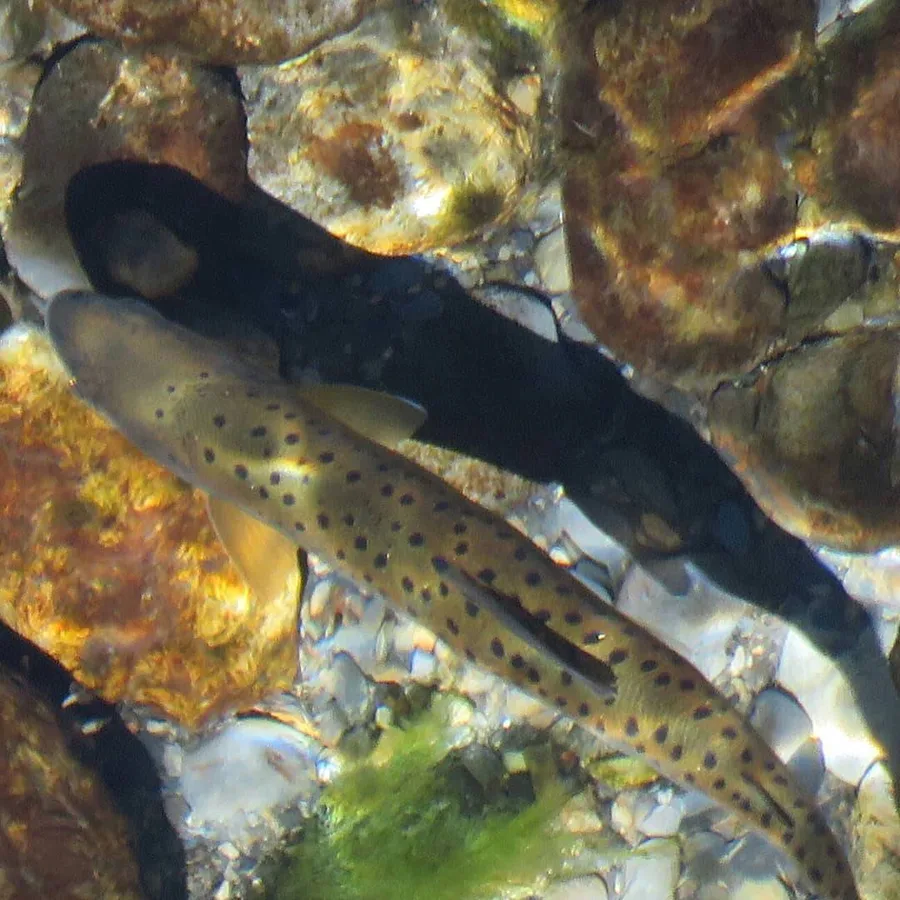
Real photoREAL PHOTO


Salmonidae
Chinook salmon
Oncorhynchus tshawytscha
Black gums returning from sea to natal rivers
- Gray
- Silver
- Temperate
- Northern Hemisphere
- Regional distribution
- Freshwater fish
- Fusiform
- Compressed cross-section
- Large
- Temperate fish
 Gray
 Temperate
 Regional distribution
 Fusiform
 Large
Reigning supreme as the king of Pacific salmon, the Chinook salmon is the largest, most muscular salmonid native to the icy rivers and cold oceanic waters of the North Pacific basin. In its marine phase, it presents a shimmering greenish-blue to teal dorsal surface shading into silver flanks, peppered extensively with small, distinct black spots across its back, dorsal fin, and both lobes of the broad caudal fin. The most definitive identification clue is its distinct lower jaw, where teeth are set firmly into dark, charcoal-black gum tissue. Ranging from northern Japan and the Kamchatka Peninsula across the Bering Strait, Alaska, and the Pacific Northwest down to central California, it undertakes epic ocean voyages spanning thousands of nautical miles across several years. Adults pursue capelin, sand lances, squid, and herring before returning with uncanny natal fidelity to ascend their home rivers, battling upstream rapids for hundreds of miles without feeding. Breeding adults darken to deep maroon or black, and males develop a hooked kype before concluding their semelparous journey. Maximum total length attains one hundred and fifty centimetres.
Sources: NOAA Fisheries — Chinook Salmon, Oncorhynchus tshawytscha
- Class
- Teleosts
- Order
- Salmons and Trout
- Family
- Salmonidae
- Genus
- Oncorhynchus
- Water type
- Freshwater
- Habitat
- Rivers and cold-water lakes
- Body shape
- Fusiform
- Diet
- Carnivorous
 Class
 Family
 Diet